 lume
lume
Your agents.Your way.
A local monitor for AI agents.
A full Workspace. A discreet Orb.
The choice is yours.
Windows · Linux · Android
Orb.
Small by choice.
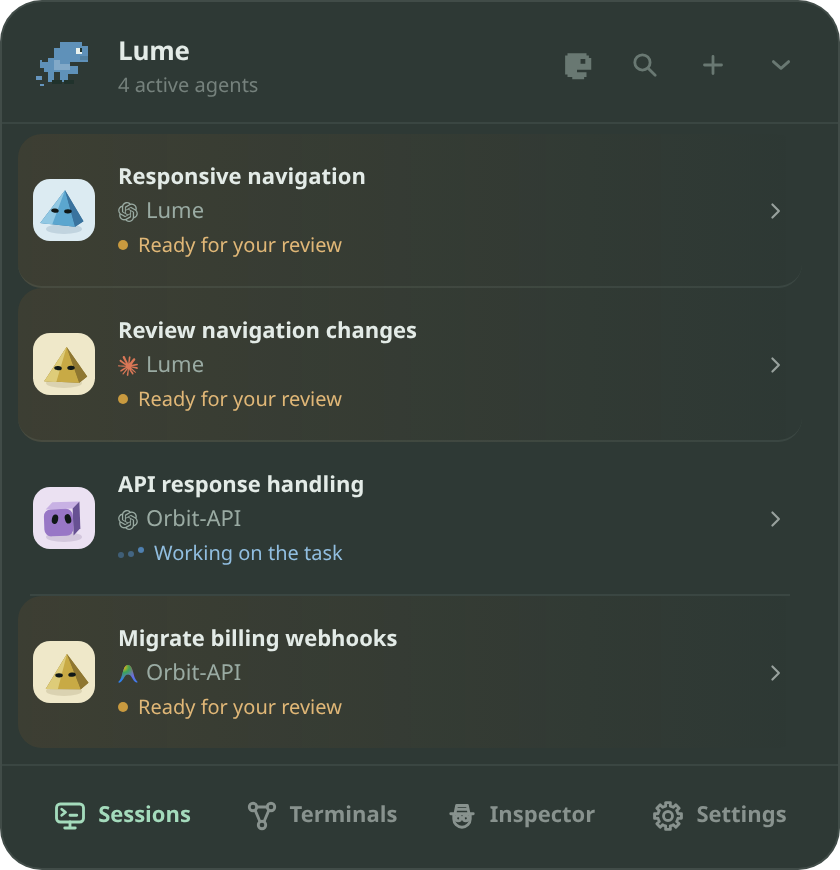
Stay with your work. Lume stays in the corner, keeping an eye on every agent.
Open the Orb to see what needs you. Give each conversation its own terminal. Arrange them, dock them, make the space yours.

Workspace.
Room to think.
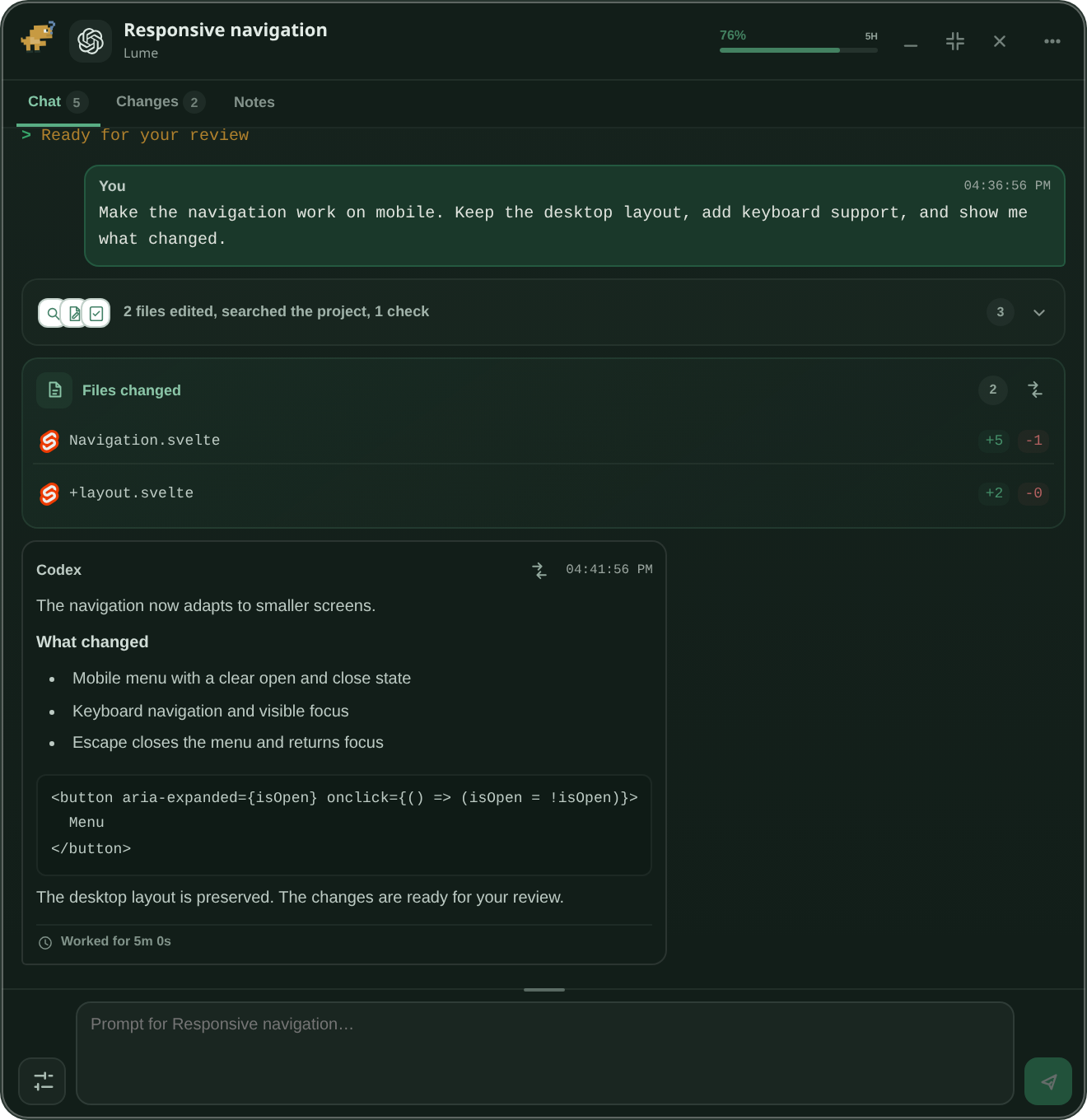
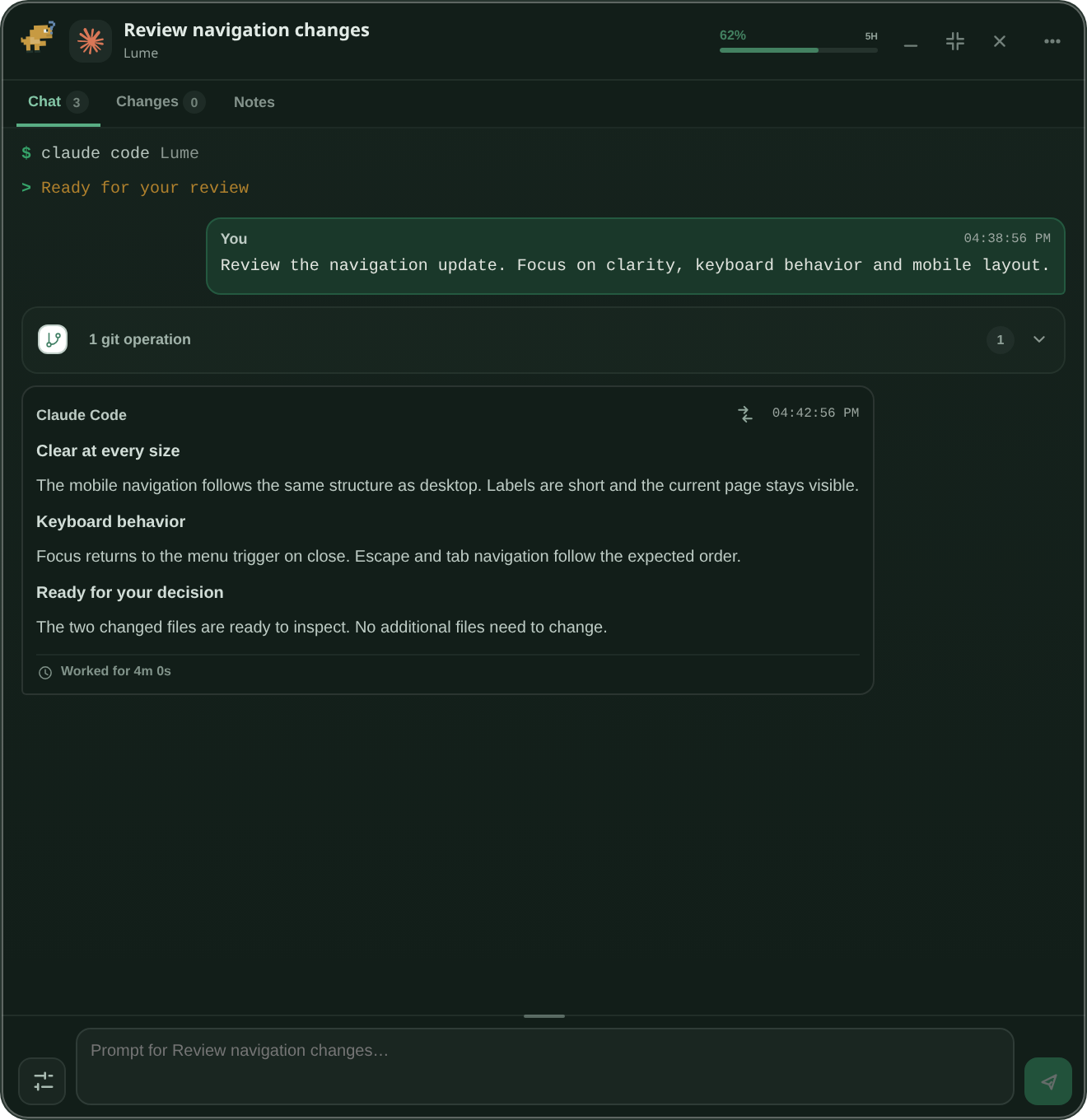
Bring the same agents into one focused workspace.
Keep up to three conversations side by side. Follow their progress, inspect the context, and review what changed — with the model and reasoning effort of each one a click away.
Everything Lume does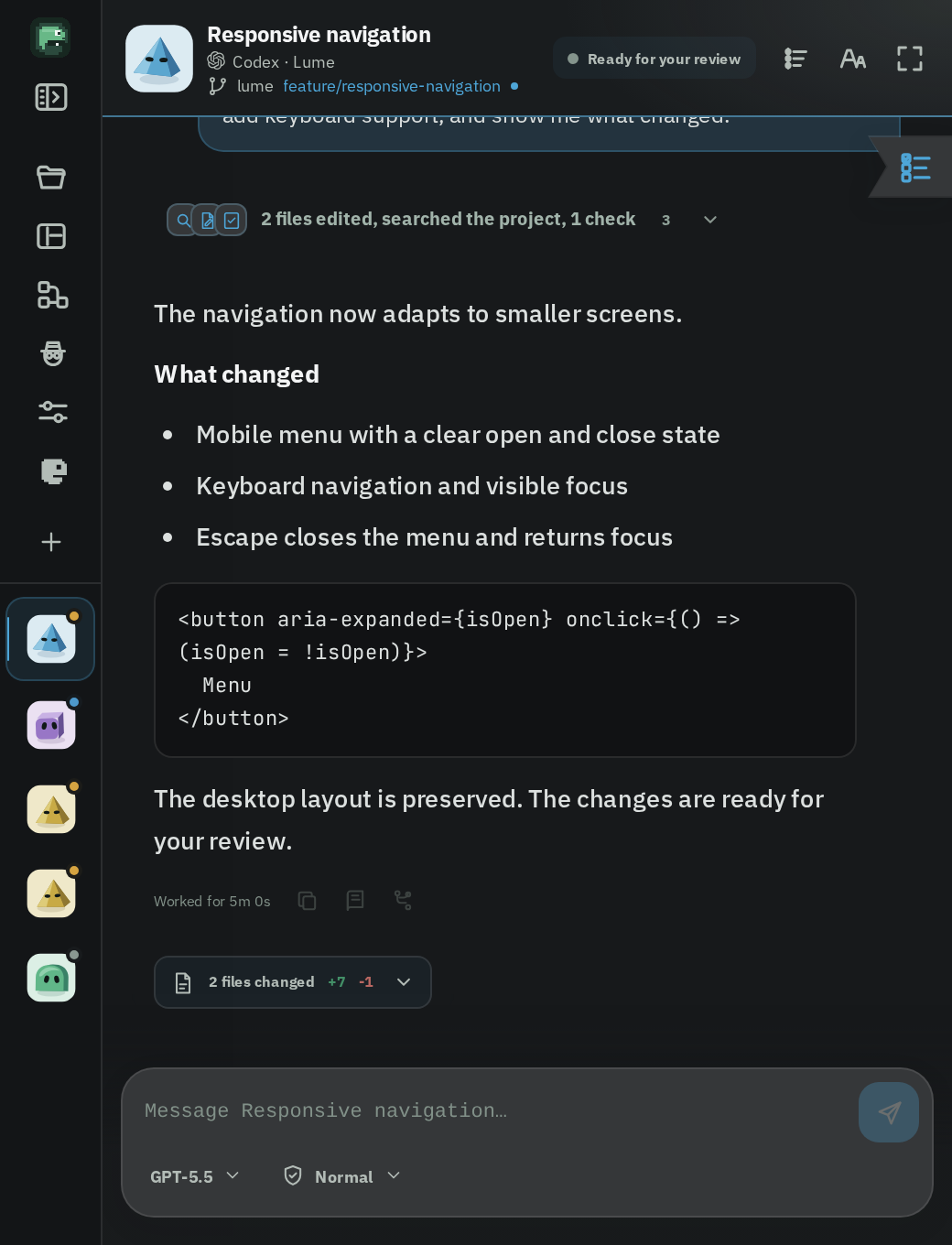
Workflow.
A team of agents.
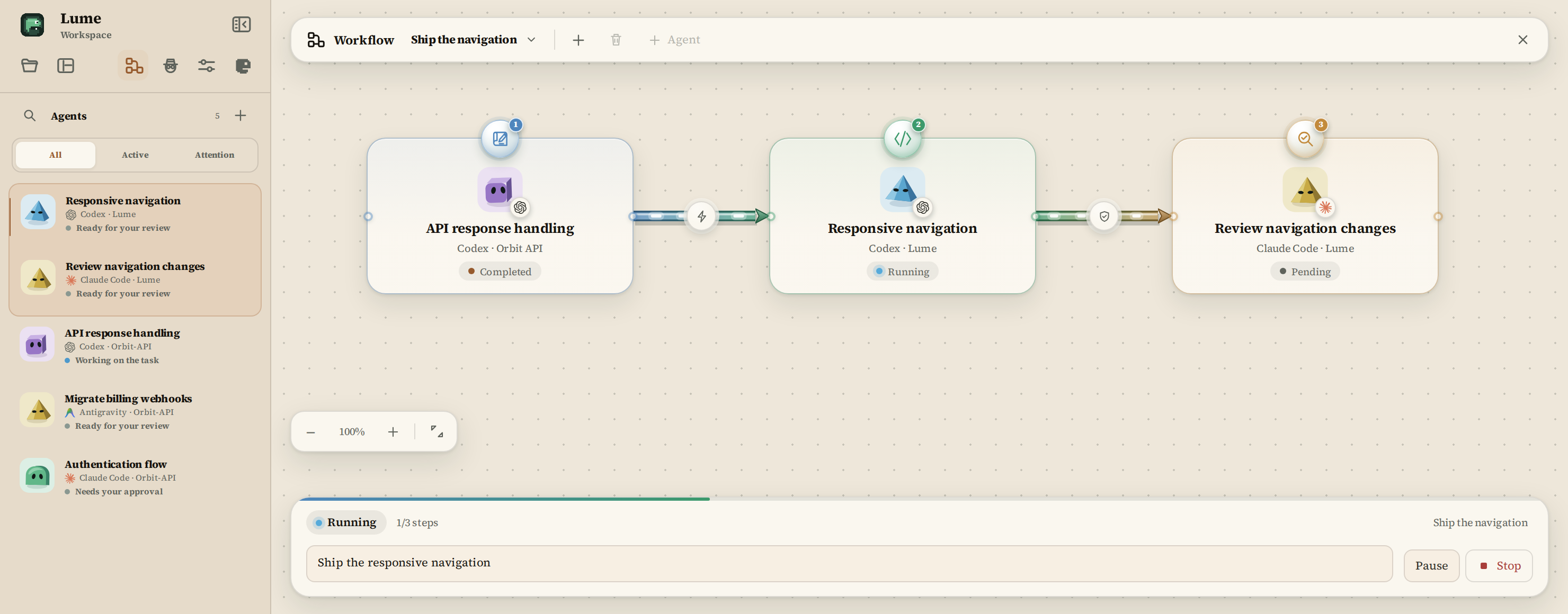
Give each agent a role, connect them in a line, and let Lume carry the right context from one step to the next.
Workflow is opt-in. Until you switch it on, nothing is shared between conversations.
- Planner
- Implementer
- Reviewer
- Tester
- Researcher
- Custom
- 01Roles with a contract
- Each step knows its instruction, its expected input, what it must produce, and when it is done.
- 02Context, not the whole chat
- Choose how much moves forward: the response, changed files, checks, plan, activity or diffs. Private reasoning never travels.
- 03Handoffs you control
- Approve each handoff, or let steps continue on their own. Loops, retries and long steps are limited by guardrails.
- 04Runs that survive
- Runs are stored on your machine and recover after Lume restarts, with every step, approval and result kept together.
Your agents already
have a home here.
Follow the sessions you already have, or start new ones from Lume. Nothing to migrate.
Lume shows only the controls each agent really supports — never a button that would not work.
- CodexFull control
- Claude CodeFull control
- Antigravity CLIFull control
- OpenCodeFull control
- DeepSeek HarnessMonitor
- Gemini CLIMonitor
- Web chatsChatGPT, Claude, DeepSeek, GeminiBrowser Companion
- VS CodeIntegration
- CursorIn development
Capabilities follow each integration’s published behavior.
Explore compatibilityLume in your pocket.
Pair a phone with one QR code and follow every agent from the couch. Open a conversation, read the answer, approve a request or send the next prompt.
Workflow state is read-only on mobile — control stays on the desktop.
- One QR codePair in seconds with the Android app or the browser.
- Your local networkEncrypted, and nothing goes through a Lume server.
- Permissions per deviceDecide what each phone can read and do.
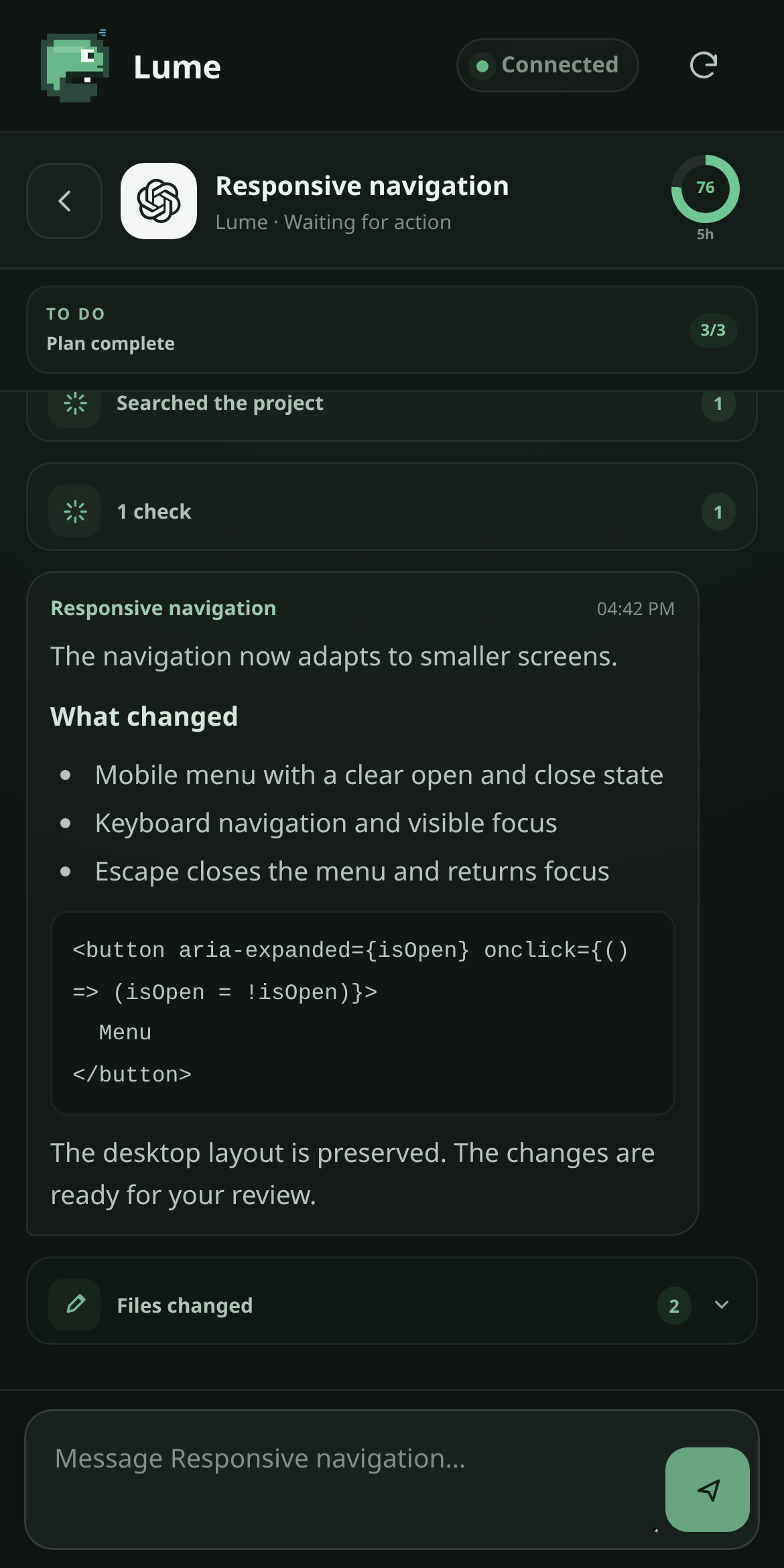
- Claude Code needs you
Run the authentication tests? - Codex finished
Responsive navigation - 3 agents running
Workflow: step 2 of 3
Your tools.
Your machines.
A wider view.
Lume’s next chapter connects the work around your agents — and the machines behind them.
In developmentGitHub, Jira and distributed execution follow the project’s documented roadmap.
- 01Lume, on your screen
The Orb and the Workspace are where you follow and direct your agents.
- 02Relay, encrypted
Encrypted transport between Lume and the machines you own.
In development - 03Node, on your machine
A background service on a paired computer. Today: identity, pairing and read-only health.
First phase available - 04Direct at home
On the same network, Lume can also reach Node without leaving your LAN.
Planned
Compute stays with you.
Node is the background service on a paired machine. Its current first phase provides identity, pairing and read-only health. Remote agent execution and encrypted Relay transport are being developed.
Explore Lume Node